المٌدوّنات

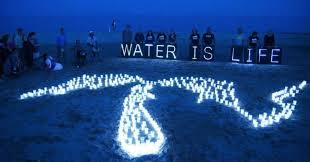
Water is life
Wherever they are, people need water to survive. Not only is the human body 60 percent water, the resource is also essential for producing food, clothing, and computers, moving our waste stream, and keeping us and the environment healthy.
Quick facts about Water
- World Water Day is 22 March and World Toilet Day is 19 November.
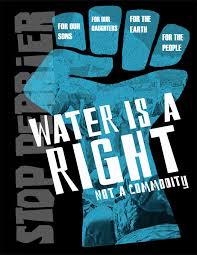
- Water and sanitation are fundamental human rights. Everyone should have sufficient, affordable, physically accessible, safe and acceptable water for personal and domestic uses.
- Every person needs 20–50 litres of clean fresh water a day for drinking, cooking and cleaning.
- The largest numbers of people who do not use improved sanitation facilities live in Sub-Saharan Africa and Southern Asia.
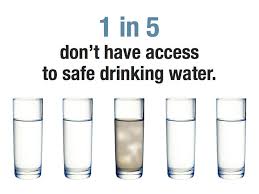
- In 2012, 11% of the global population (783 million) did not have access to safe fresh water.
2.5 billion people live without basic sanitation. - Food and water tainted with human waste causes diseases that lead to about 1.5 million deaths of children a year.
- 70% of the world's fresh water is used in agriculture, which highlights the link between access to water and food security.
- Over the last 60 years there have been more than 200 international water agreements and only 37 cases of reported violence between states over water.
Water Crisis
The water you drink today has likely been around in one form or another since dinosaurs roamed the Earth, hundreds of millions of years ago.
While the amount of freshwater on the planet has remained fairly constant over time—continually recycled through the atmosphere and back into our cups—the population has exploded. This means that every year competition for a clean, copious supply of water for drinking, cooking, bathing, and sustaining life intensifies.
Water scarcity is an abstract concept to many and a stark reality for others. It is the result of myriad environmental, political, economic, and social forces.
Freshwatermakes up a very small fraction of all water on the planet. While nearly 70 percent of the world is covered by water, only 2.5 percent of it is fresh. The rest is saline and ocean-based. Even then, just 1 percent of our freshwater is easily accessible, with much of it trapped in glaciers and snowfields. In essence, only 0.007 percent of the planet's water is available to fuel and feed its 6.8 billion people.
Clean, safe drinking water is scarce. Today, nearly 1 billion people in the developing world don't have access to it. Yet, we take it for granted, we waste it, and we even pay too much to drink it from little plastic bottles.
Water is the foundation of life. And still today, all around the world, far too many people spend their entire day searching for it.
In places like sub-Saharan Africa, time lost gathering water and suffering from water-borne diseases is limiting people's true potential.
Education is lost to sickness. Economic development is lost while people merely try to survive. But it doesn't have to be like this. It's needless suffering.
Every day in rural communities and poor urban centers throughout sub-Saharan Africa, hundreds of millions of people suffer from a lack of access to clean, safe water.
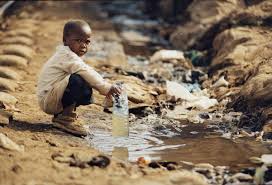
Women and girls especially bear the burden of walking miles at a time to gather water from streams and ponds - full of water-borne disease that is making them and their families sick.
Illness from drinking dirty water and the time lost fetching it robs entire communities of their futures.
Hope is put on hold in over half of the developing world's primary schools without access to water and sanitation.
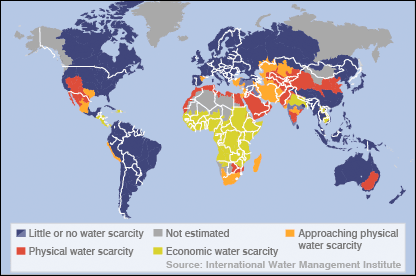
Water Crisis in Africa
Every day in rural communities and poor urban centers throughout sub-Saharan Africa, hundreds of millions of people suffer from a lack of access to clean, safe water.
Women and girls especially bear the burden of walking miles at a time to gather water from streams and ponds - full of water-borne disease that is making them and their families sick.
Illness from drinking dirty water and the time lost fetching it robs entire communities of their futures.
Hope is put on hold in over half of the developing world's primary schools without access to water and sanitation.
Without clean water, the possibility of breaking out of the cycle of poverty is incredibly slim.
With unclean water sources often miles from villages, many of the able bodied members of a community are forced to spend hours each day simply finding and transporting water. The typical container used for water collection in Africa, the jerry can, weighs over 40 pounds when it's completely full.
Imagine how demanding it would be to carry the equivalent of a 5-year old child for three hours every day. And some women carry even more, up to 70 pounds in a barrel carried on the back. That's like carrying a baby hippo.
Water Crisis in India
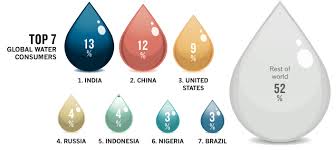
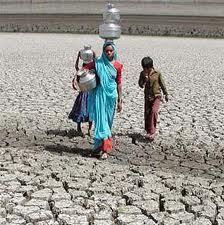
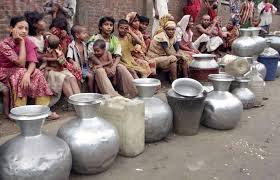
India’s huge and growing population is putting a severe strain on all of the country’s natural resources. Most water sources are contaminated by sewage and agricultural runoff. India has made progress in the supply of safe water to its people, but gross disparity in coverage exists across the country. Although access to drinking water has improved, the World Bank estimates that 21% of communicable diseases in India are related to unsafe water. In India, diarrhea alone causes more than 1,600 deaths daily—the same as if eight 200-person jumbo-jets crashed to the ground each day. Hygiene practices also continue to be a problem in India. Latrine usage is extremely poor in rural areas of the country; only 14% of the rural population has access to a latrine. Hand washing is also very low, increasing the spread of disease. In order to decrease the amount of disease spread through drinking-water, latrine usage and hygiene must be improved simultaneously.
How can we help?
The links between a lack of water and sanitation access and development goals are clear, and the solutions
to the problem are known and cost-effective. It is estimated that every $1 spent on water and sanitation generates $4 in increased economic opportunity. Universal access to water and sanitation would result in an estimated $32 billion in economic benefits per year globally from reductions in health care costs and increased productivity from reduced illness.
Since 1990, the proportion of the global population using an improved drinking water source has increased from 76% to 91%, and the proportion of the global rural population without access to improved sanitation has declined by nearly a quarter; open defecation rates in rural areas, furthermore, have fallen from 38% to 25% in 2015. But with hundreds of millions of people still without safe drinking water and progress towards sanitation goals still off-track, scale-up of efforts are needed to ensure safe water and sanitation for all. Specific areas that need to be addressed include urban-rural disparities, poverty-related inequity, and the burden on women and girls. Calling for the universal and equitable access to safe and affordable drinking water for all, the newly ratified Sustainable Development Goal (SDG) targets for water and sanitation provide a powerful platform to bring this mission to fruition.
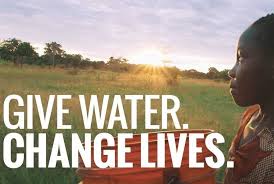
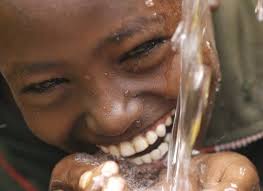
For a small investment, you can fund reliablewater projects that serve villages and schools.
Wells, dams and rain catchment systems can provide a reliable source of drinking water. Sanitation facilities and hygiene training then help multiply the impact. Communities become far better able to grow themselves out of poverty.
You can help restore hope.
Give water and help rescue some of the 440 million school days lost every year to water-related sickness. Put an end to the nearly 1 in 5 deaths under the age of five that occur due to dirty water. See between $3 and $34 be returned in economic growth for every $1 invested.
You can unlock potential.